
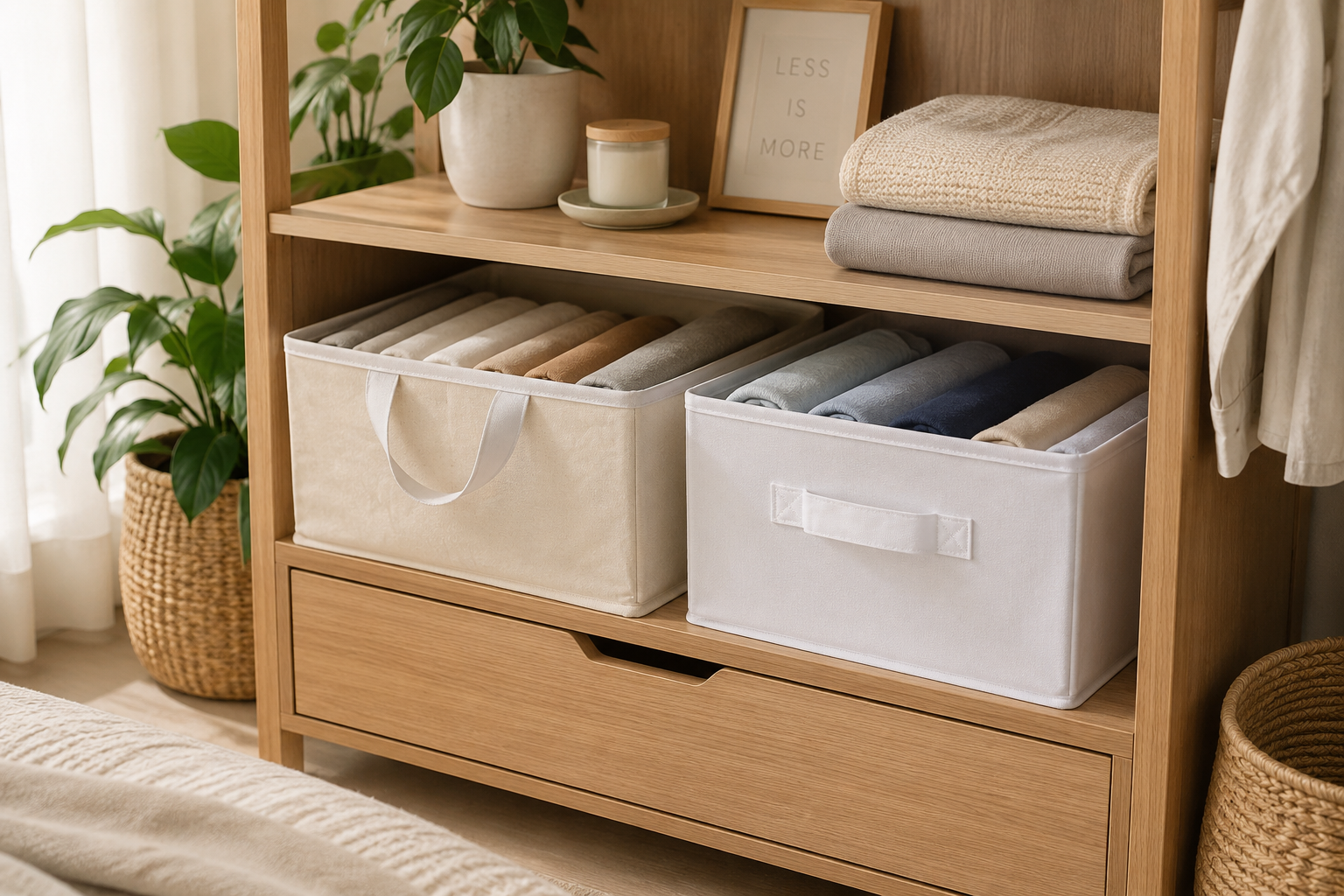
A fabric storage bin is a lightweight container made primarily from textile materials and designed to organize, store, and protect household or commercial items. Fabric storage bins are commonly made from canvas, cotton, polyester, non-woven fabric, or blended materials and can be customized in size, shape, color, printing, and construction.
What Is a Fabric Storage Bin?
A fabric storage bin is a storage container made primarily from fabric or other textile materials. Unlike rigid plastic or metal storage containers, fabric bins have a soft structure and can be designed to fold or collapse when they are not being used.
The basic structure usually consists of an outer fabric body, with some designs adding a lining, reinforcement, handles, bottom board, side panels, or internal support to improve stability.
Because the construction is relatively flexible, fabric storage bins can be developed in many different sizes and shapes. They can also be customized with different fabrics, colors, prints, labels, and packaging according to the requirements of a retailer, brand, or private-label customer.
How Is a Fabric Storage Bin Made?
Although the final product may look simple, a fabric storage bin usually involves several manufacturing steps.
The process generally includes:
1. Material selection – choosing the appropriate fabric, lining, reinforcement, and accessories.
2. Fabric cutting – cutting the fabric panels according to the approved dimensions.
3. Sewing – assembling the panels and adding handles, pockets, or other components.
4. Reinforcement – adding support where necessary to improve the shape and durability.
5. Finishing – trimming threads, checking seams, cleaning the product, and completing other finishing details.
6. Quality inspection – checking dimensions, appearance, construction, and workmanship.
7. Packing – folding or assembling the bins and preparing them according to the buyer's packaging requirements.
The exact process depends on the product design. A simple collapsible fabric bin may require a different construction from a structured nursery organizer or a fabric drawer with a rigid insert.
Common Materials Used for Fabric Storage Bins
Different fabrics can produce very different results in terms of appearance, structure, durability, and cost.
1. Cotton Canvas
Cotton canvas is commonly used when a natural fabric appearance and stronger structure are required. It can also be suitable for products positioned toward a more premium or natural-looking market.
2. Polyester
Polyester fabrics are commonly selected for their durability, color options, and relatively easy maintenance.
Depending on the fabric construction and weight, polyester can be used for a wide range of storage applications.
3. Non-Woven Fabric
Non-woven fabric is lightweight and can be suitable for economical storage products. It is often used when low weight and cost are more important than a premium fabric appearance.
4. Blended Fabrics
Blended fabrics can combine characteristics from different fibers. The appropriate blend depends on the required appearance, strength, hand feel, price target, and production requirements.
For OEM products, the “best” fabric is not necessarily the heaviest or most expensive option. The right material depends on the intended use and the specifications of the finished product.
Where Are Fabric Storage Bins Used?
Fabric storage bins are used in many residential, nursery, retail, and commercial environments.
Common applications include:
For nursery and children's products, buyers may have additional requirements related to materials, printing, construction, product safety, and the regulations of the target market.
Fabric Storage Bin vs. Plastic Storage Bin
Neither type is suitable for every application. The choice depends on the required structure, environment, appearance, capacity, price, and intended use.
Pros and Cons of Fabric Storage Bins
Pros
Cons
What Should OEM Buyers Consider?
When developing a custom fabric storage bin, OEM buyers should consider more than just the product dimensions. Material selection, construction, branding, order quantity, packaging, and target-market requirements can all affect the final product, production cost, and lead time.
The following specifications should be confirmed before moving into bulk production.
1. Product Dimensions
Define the required length, width, height, and finished dimensions. If the storage bin needs to fit a specific shelf, drawer, or retail display, confirm the available space and dimensional tolerances.
2. Fabric and Materials
Specify the fabric type, fiber composition, fabric weight (GSM), color, surface finish, lining, and any additional material requirements. Material selection should reflect the intended use, durability expectations, appearance, and target price.
3. Construction and Structure
Consider the lining, reinforced handles, bottom support, side panels, stitching, folding mechanism, and any inserts or structural components. These details affect the bin's shape, load-bearing performance, durability, and ability to retain its form.
4. Printing and Branding
Choose the appropriate branding method, such as screen printing, heat transfer, embroidery, woven labels, or care labels. Artwork, logo placement, print size, and color requirements should be confirmed before sampling.
5. Order Quantity and Minimum Order Requirements
Confirm the expected order quantity, initial order volume, and potential repeat orders. Fabric sourcing, printing methods, and other production processes may have different minimum order requirements, which can influence unit cost and production efficiency.
6. Packaging and Labeling
Specify individual packaging, carton packing, product labels, inserts, barcodes, and retail packaging as needed. Packaging requirements should be confirmed early to avoid changes late in the production process.
7. Target-Market Requirements
Identify the destination market, such as the United States, Canada, or Japan. Applicable requirements may vary depending on the intended use, materials, product claims, labeling, and packaging. Buyers should confirm the relevant requirements before production.
8. Sampling and Quality Control
Before bulk production, review and approve a product sample that reflects the agreed specifications. Define the key quality checkpoints, including dimensions, stitching, material appearance, printing quality, structural performance, and packaging.
For a new OEM project, confirming the product specifications, material requirements, sample approval, and quality expectations early can help reduce misunderstandings, avoid unnecessary revisions, and support a smoother production process.
Frequently Asked Questions
What is a fabric storage bin?
A fabric storage bin is a soft-sided storage container made primarily from textile materials. It is used to organize and store items such as clothing, toys, household goods, and nursery products.
What fabric is commonly used for storage bins?
Common materials include cotton canvas, polyester, non-woven fabric, and blended fabrics. The appropriate material depends on the product's intended use, required structure, appearance, durability, and target cost.
Are fabric storage bins collapsible?
Many fabric storage bins are designed to fold or collapse when not in use. However, the degree of collapsibility depends on the product structure and whether it contains rigid inserts or internal reinforcement.
Can fabric storage bins be customized?
Yes. OEM fabric storage bins can be customized in dimensions, fabric, color, printing, labels, handles, construction, and packaging depending on the project requirements.
What is the MOQ for custom fabric storage bins?
MOQ depends on the product design, material, fabric availability, and production requirements. For small orders, fabric supplier MOQ can sometimes be an important factor in determining the final cost.
Can fabric storage bins be used for nursery products?
Yes. Fabric storage bins are commonly used for organizing nursery items such as diapers, baby clothes, toys, and books. For products intended for children or babies, buyers should confirm the applicable requirements for the target market.
How long does it take to manufacture custom fabric storage bins?
Production time depends on the product design, order quantity, material availability, sampling process, and packaging requirements. A confirmed lead time should be provided after the product specification and sample are approved.
Conclusion
ConclusionA fabric storage bin is more than a simple fabric box. Its functionality, durability, and appearance depend on the combination of materials, construction, reinforcement, dimensions, and manufacturing quality.
For OEM and private-label buyers, defining these specifications early can help improve product consistency, manage production costs, and reduce unnecessary revisions. Material sourcing is also an important consideration, particularly for smaller orders where supplier minimums may affect material availability and overall pricing.
If you are planning a custom fabric storage bin project, start by defining the product dimensions, preferred materials, estimated order quantity, intended application, branding requirements, and target market. These details provide a clearer starting point for evaluating product feasibility and obtaining a relevant quotation.
Looking for a supplier for custom fabric storage bins? Contact our team to discuss your product specifications, customization options, and project requirements.